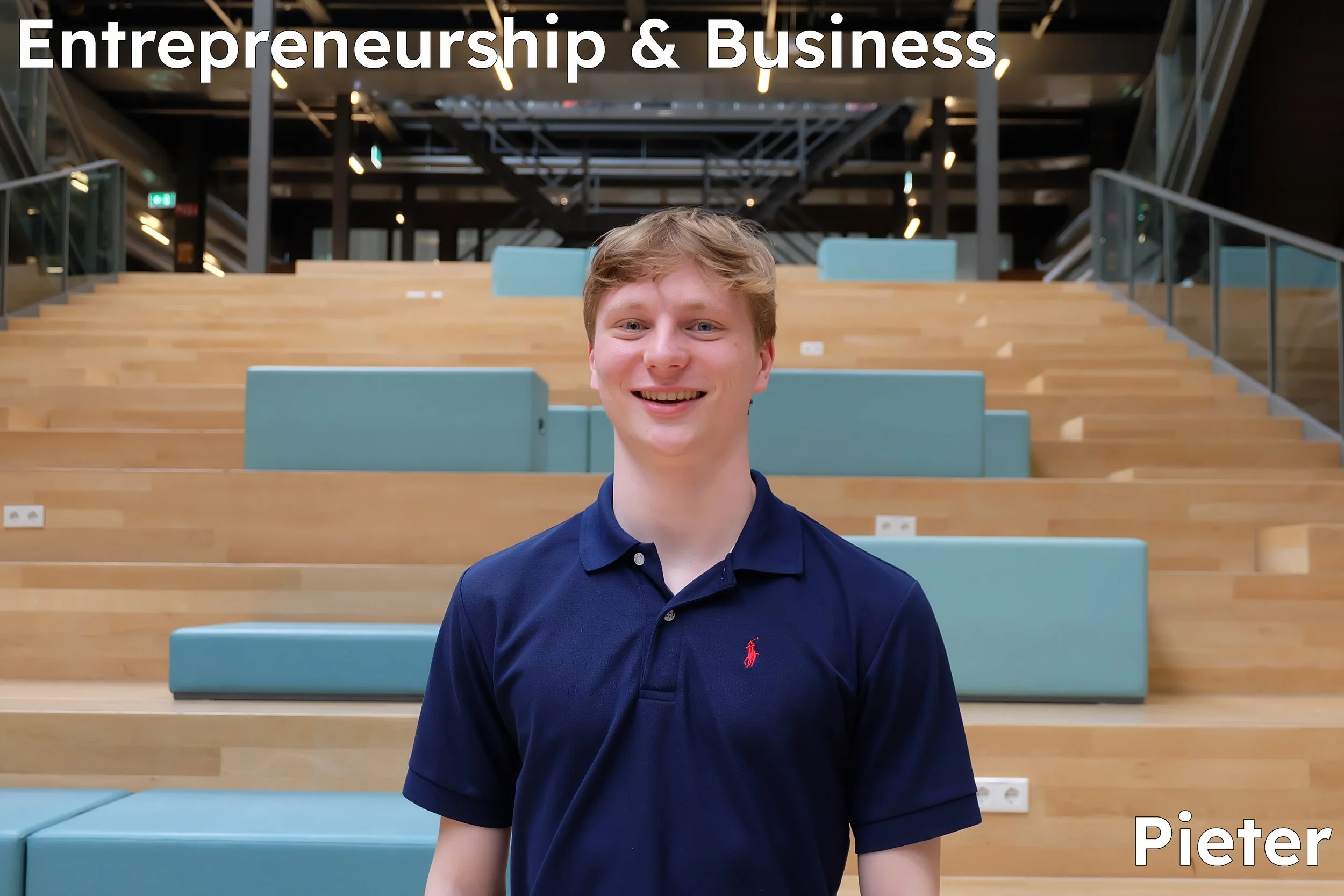
Meet Pieter from Entrepreneurship & Business Development track
My name is Pieter Engbers and I am from Weesp, in the Netherlands. My main study program is BIT (Business Information Technology), and my Honours track is Entrepreneurship & Business Development.
Until now, we have mostly had class discussions where we analyze successful past businesses that worked out in the past together with concepts needed to start a business. Furthermore, we have assignments in which you, as a person, analyse what your means are for starting a business. Furthermore, everyone had to read a book from a list and analyse the main concepts in it, which can be useful for starting a business. I really liked this as the book was really insightful as well. Our group assignment is that we have to interview an entrepreneur, who started his business within the last 5 years in order to learn from them. Right now we are learning about what good and bad business ideas are and how to come up with a good business idea.
At the moment, it is not that much extra work, but I have heard that in the future, when you are actually starting your business idea, it will cost more time. I really like our track as it reminds me of highschool, which is an aspect I miss in my own study. Everyone knows each other and due to the size, fewer people are afraid to voice their opinion. I really like that we are now coming up with business ideas and evaluating to see what aspects of it work, and what aspects would cause the idea to fail.
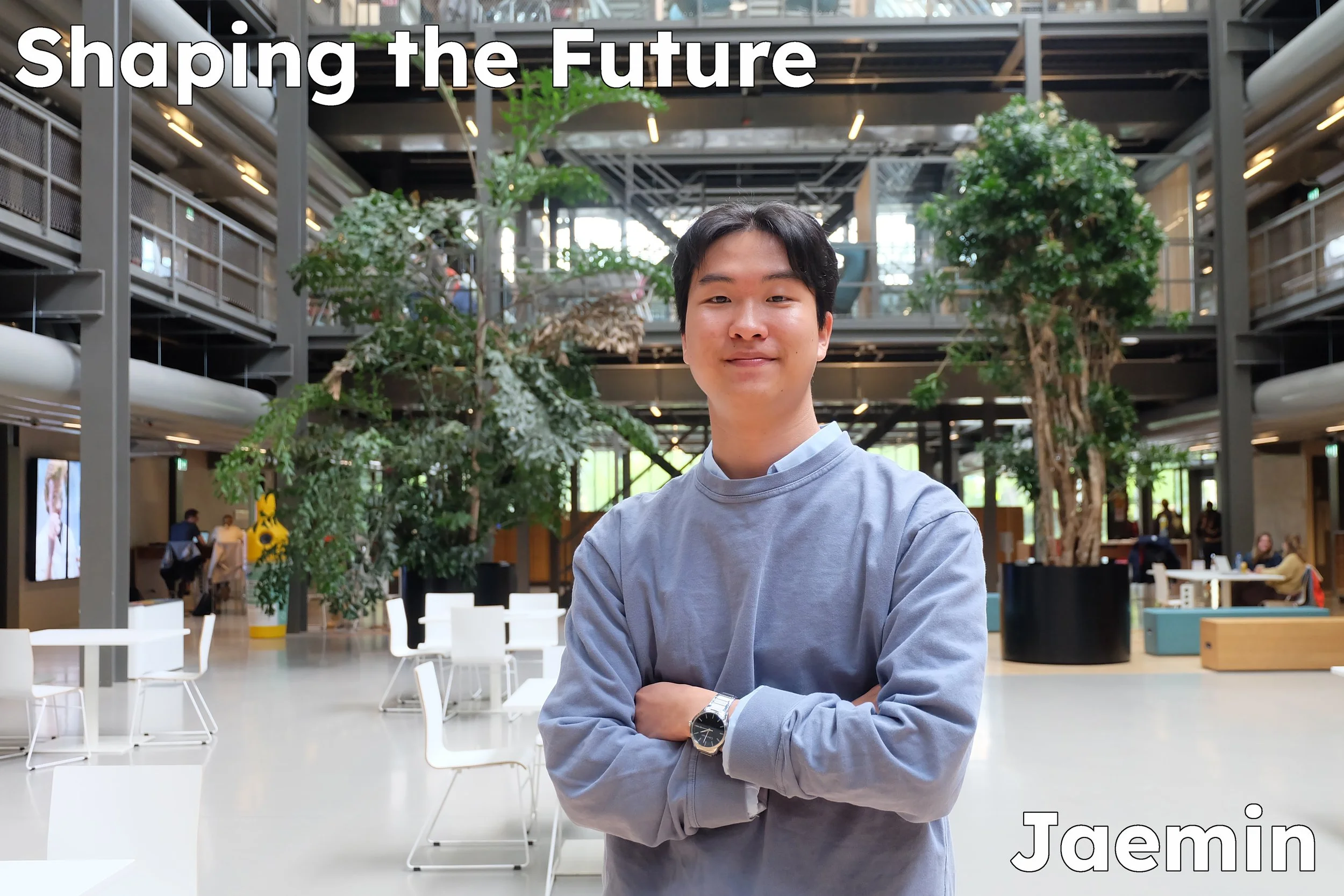
Meet Jaemin from Shaping the Future track
Hey! I’m Jaemin, from Korea. I study Industrial Design Engineering and I’m part of the Honours track Shaping the Future.
The classes in Shaping the Future are mainly discussion-based. The professor usually introduces a big question or concept, and we explore it together as a group. It’s very interactive, and the focus is more on thinking deeply than on finding a single “right” answer.
The track is divided into larger modules. We recently finished the cosmology part, where we explored topics like dark matter, dark energy, the expansion of the universe, and stars. Now we’ve moved into biology as part of the Origins module, where we look at topics such as evolution, embryonic development, development of consciousness and how complex life forms emerge through processes like compartmentalization. Alongside the classes, we also work on presentations and essays, either in groups or individually, based on topics from the course that we’re personally interested in. For example, some people explored ideas like synchronicity or brain development. I think that’s one of the nicest parts of the track is that you get the motivation to really dive into what you find interesting.
In the beginning, I wasn’t sure if I could manage the workload alongside my main study, but as I continued, I realized I genuinely enjoy it. It doesn’t feel like an extra burden but rather it’s more like having casual but intellectually stimulating discussions with people who share the same interests.
What I find especially interesting about Shaping the Future is that it doesn’t just focus on technical and scientific aspects, but also incorporates psychology and philosophy. We really question the fundamental principles and meanings behind what we learn, which makes the experience much broader and more thought-provoking.
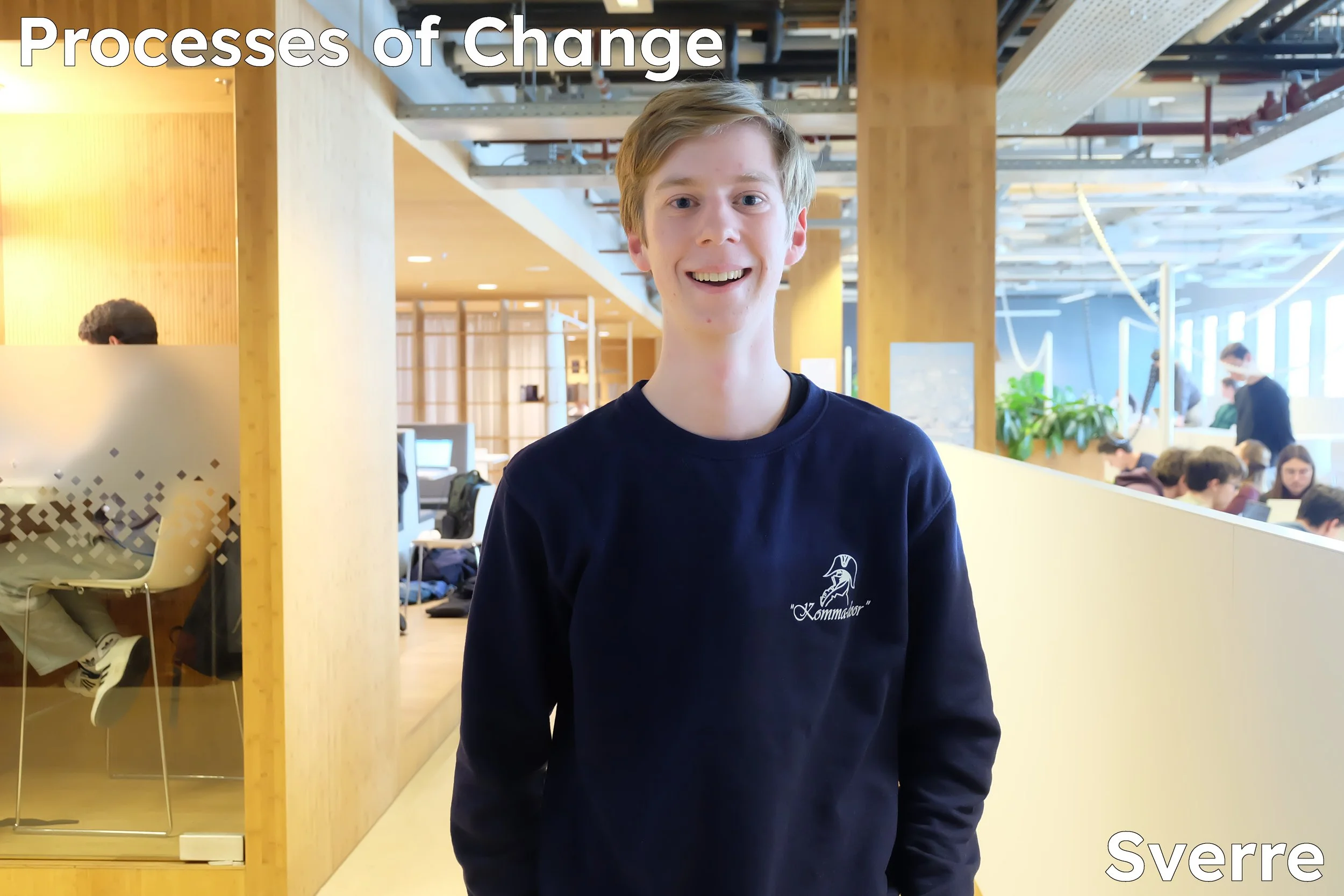
Meet Sverre from Processes of Change track
My name is Sverre and I'm from Dordrecht (near Rotterdam). My main study programme is Applied physics and I just finished the first module of the track Process of change!
Our track is mostly focussed on presentations and group discussions, but we also have some lectures now and then!
We are now working on a storyboard to analyse a possible opioid crisis in Europe and in the previous weeks we learned a lot about the perspectives to use when analysing a change.
It's really cool that you get a lot of freedom in your honours track. This way you can actually understand all the subjects that are discussed in class in your own way. But the best part of honours? That's ofcourse meeting fantastic people from all different kinds of studies!
Ps: mesa+ really needs some better sauce management
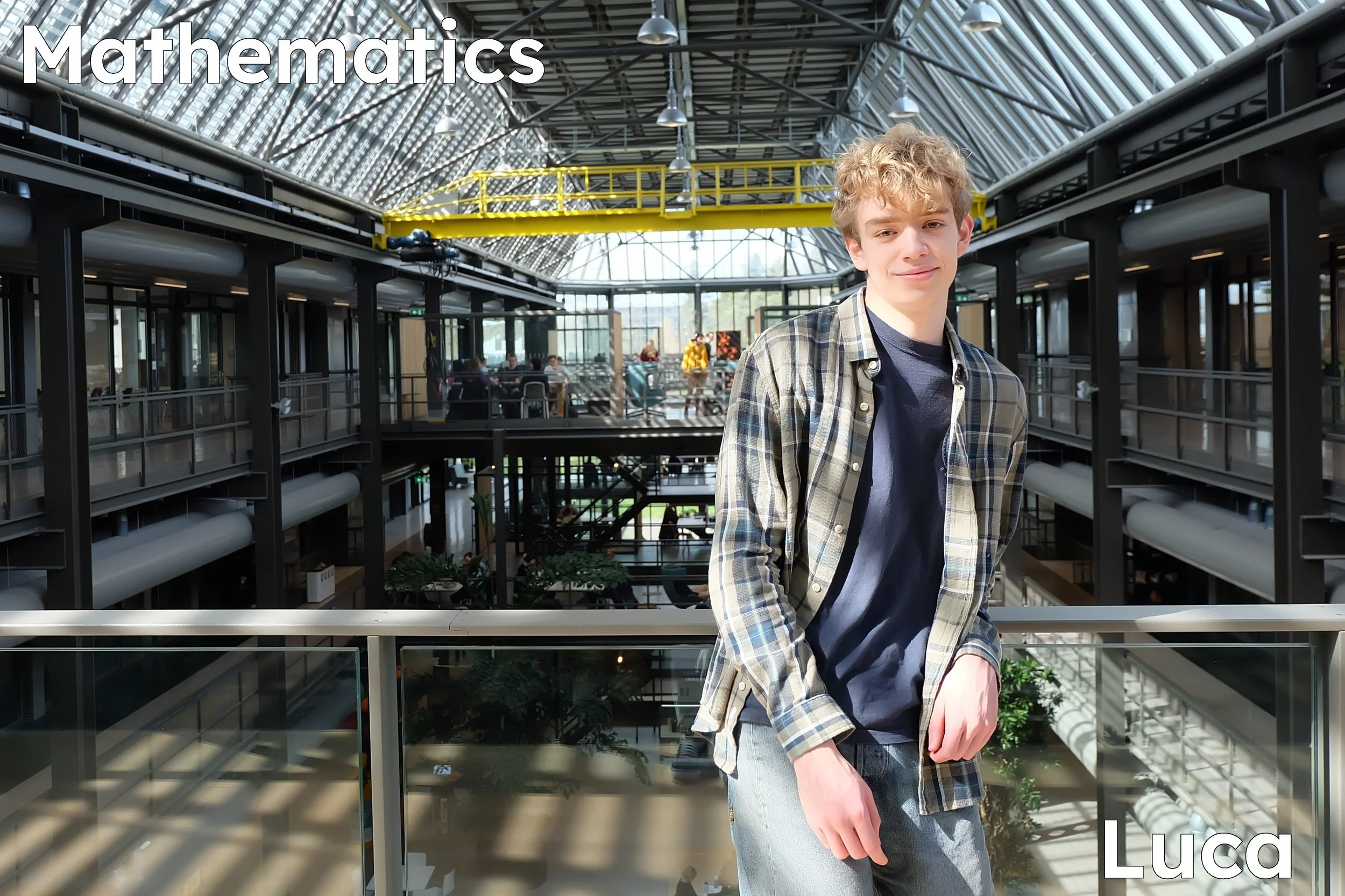
Meet Luca from Mathematics track
My name is Luca, I am Spanish and Dutch. I lived my whole life in Madrid and decided to move to Twente because of the variety of things to do next to your main studies, and the hands-on, project-based module structure at this university.
I am a 1st year student in Mechanical Engineering and joined the Mathematics Track, since it’s a subject that interests me a lot and compliments my main studies quite well.
In Mathematics we have 6 different courses that are built from the ground up, so you don’t have to worry that much about getting lost in a specific module. Most courses don’t have exams, and our work is evaluated with projects or by explaining exercises in front of our classmates. We usually have around 9 lectures and 6 tutorials per module.
We are currently learning about Topology, a pure mathematics course where we study abstract geometrical properties, using logic, set theory, and metrics. The four courses in the second-year focus more on applied mathematics, with topics like Networks, Signals, Quantum Physics and Machine Learning.
It’s definitely a big-time investment, but if you are a hard-working student who really enjoys mathematics, you won’t regret joining this Honours Track!
One of the reasons I joined this track is because I am interested in a wide range of fields outside my main study, like robotics, physics, and AI. This track offers a good base to pivot into different fields outside your main study if you wish to do so.
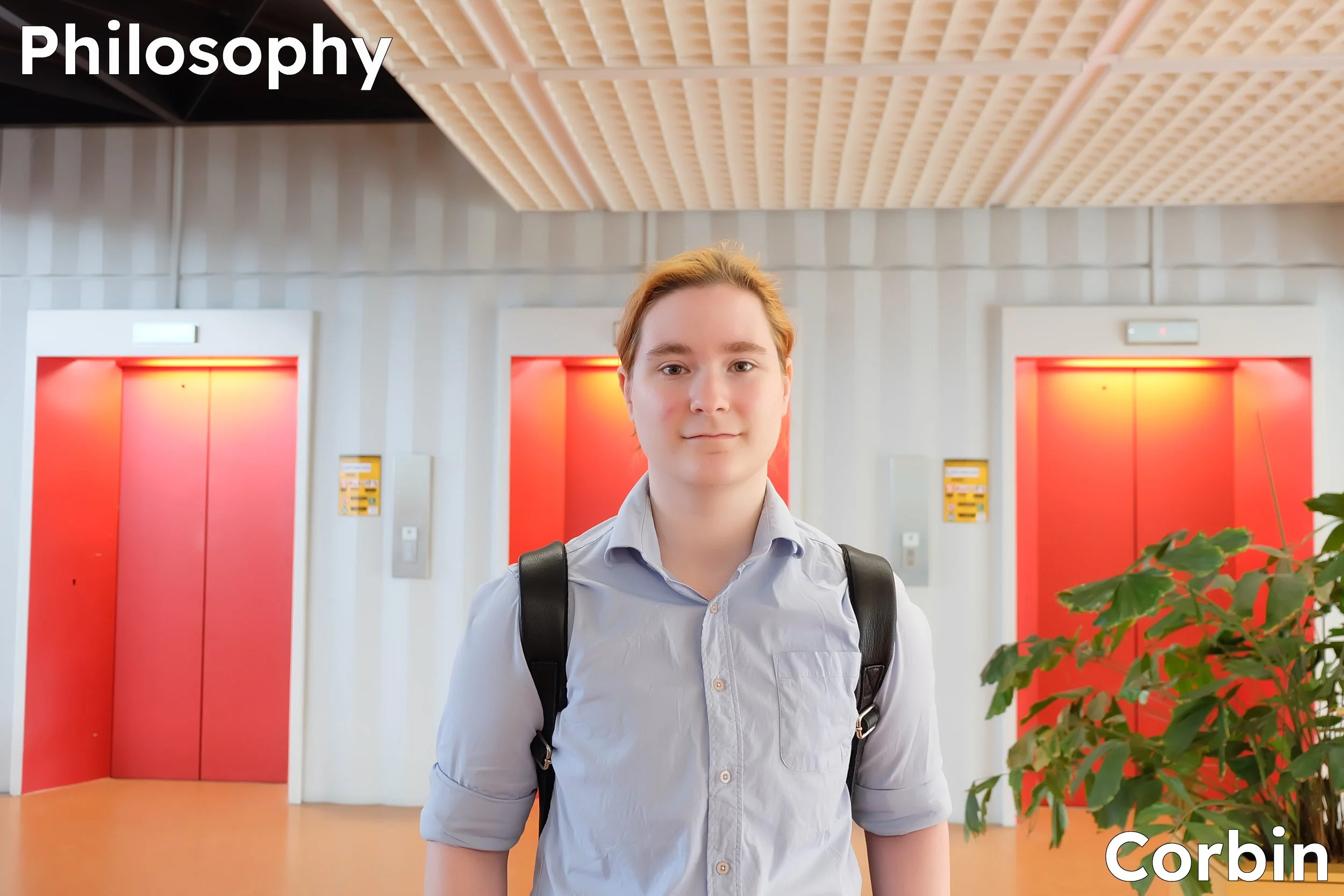
Meet Corbin from Philosophy track
My name is Corbin Medrick and I'm from Arlington, Virginia, or very close to Washington, D.C. in the US. Now, I'm doing a Bachelor's in Civil Engineering. For Honours, I'm doing the Philosophy track.
We have weekly readings that we read in advance for Monday sessions, where all the students meet up to discuss the readings and the reading questions, and we prepare a presentation for our Wednesday sessions, where we present to the professor our understanding of the reading and the questions that the reading inspired amongst us. Then we go further in depth with the reading with the professor, usually in a way that has the professor drawing the reading that may have felt fairly specific back to the broader topic of the module. In between Monday and Wednesday classes we also have a small writing assignment based on the reading questions to show our own more private understandings and interests in the reading and get feedback from the professors.
Our current module is on figuring out for ourselves what all philosophy entails and getting used to the critical thinking style necessary for really engaging with the texts we receive. Just this week we're discussing Kant's essay "What Is Enlightenment?" and going further into the ideas of public and private reason. At the moment we're going chronologically through a lot of philosophers and while part of it is just seeing their different ideas and engaging with that side of it, part of it is also seeing the different styles in which they communicated their ideas and just getting a broad idea of how many different ways there are to actually participate in philosophy while keeping us focused on what connects all of them, it's been very fun so far. It's definitely a class where it's almost fun to be a bit wrong in how you read something when it hits the Wednesday class and the teacher explains part of the reading in a different way to your reading/discussion and there's a sort of epiphany moment of it finally clicking why a certain section was worded that way, or just that moment of understanding why you were reading that essay in the first place.
I really enjoy it, partly because it's very different from what I'm usually doing for Civil Engineering. It's a different writing style, and quite frankly the assignments themselves ask for a different way of approaching the answers, as the questions almost are less about describing the answers the philosophers came to, and more about your own interpretations and agreements/disagreements with their conclusions. That and I get to engage with a lot of subjects I normally wouldn't in my regular studies, with brushing up on historical context to better understand a philosopher, or researching weirdly niche topics that I want to bring up as an example in answers to relate to what the philosophers are discussing.
I think mainly that there's a lot of talking in our track, our Monday sessions are just us, completely student-led, so we've had to get pretty comfortable with organizing ourselves and discussing pretty different topics each week. And also that at times it's almost a benefit to not have a ton of knowledge of philosophy beforehand, since it's more fun in the discussion when we have people approaching the same reading from very different context-levels regarding history, philosophy, or even just life experiences related to the readings.
Interview and photography: Huy Ho (PubliCie Committee)
